All Dubai areas · Homes and businesses · On-site, 24/7+971 55 209 9785
Home / Services / Gas Stove Repair

Gas Stove and Gas Cooker Repair in in Dubai

Same-day gas stove, gas cooker and cooking range repair at home across Dubai. Igniters, burners, gas ovens, regulators, hoses and gas conversion.

Reviewed by Abdul Suboor, Lead Engineer at One Click Dubai, 18 years of experience

Same day service at your homeAED 100 diagnostic visit, plus VATGenuine parts, 1-month warranty
WhatsApp us
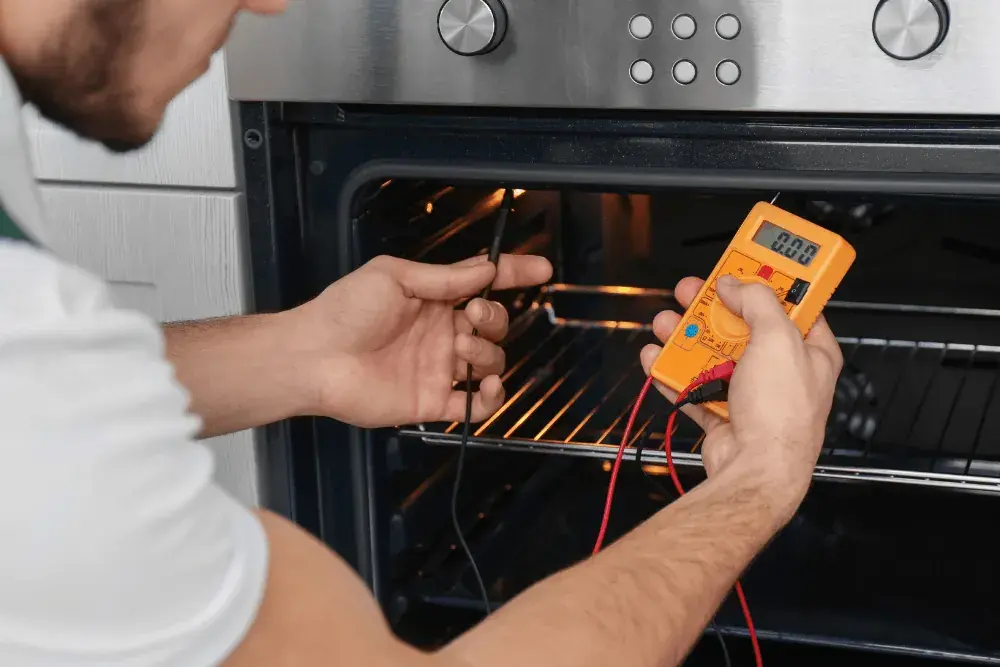
One Click Dubai technician repairing a gas cooker burner

Overview

One Click Dubai repairs gas stoves, gas cookers, gas hobs and cooking ranges at home across Dubai, with a technician sent the same day. We repair the burners and the gas oven, replace igniters, thermocouples, valves, jets, regulators and hoses, connect cookers to cylinders and to piped gas, and convert appliances between the two. We also repair commercial gas ranges.

A gas burner needs three things: gas at the right pressure, air to mix with it, and a spark. Nearly every fault is one of those three going missing, and most of them can be narrowed down from the kitchen in a couple of minutes. This page starts with what to do if you smell gas, then works through each fault, the cylinder and piped-gas side, the oven, and cost.

Gas stove repair in Dubai: the short answers

Gas stove repair in Dubai from One Click Dubai starts with a AED 100 diagnostic visit, plus VAT. The technician tests the ignition, each burner and valve, the oven, the regulator and hose, checks every joint for leaks and gives a fixed price before any repair.

QuestionAnswer
How soon can you come?The same day, at any hour. Within the hour for a gas smell or an emergency
Which appliances?Freestanding gas cookers and cooking ranges, built-in gas hobs, gas-on-glass hobs, table-top gas stoves, gas ovens, commercial gas ranges and burners
What do you repair?Igniters, spark generators, switch harnesses, thermocouples, gas valves, jets, burners, knobs, oven burners, oven thermostats, regulators and hoses
Cylinder or piped gas?Both. We connect, test and convert between LPG cylinders and piped gas
Which parts?Genuine parts. About 90% of what we use is in stock
Is it repaired at home?Yes
What does the visit cost?AED 100 plus VAT, with no night or weekend surcharge
Is the repair covered?Yes. One month on parts and labour

If you smell gas

If you smell gas, treat it as a leak until it is proved otherwise. The steps are simple and the order matters.

1
Do not touch any switch

Lights, the extractor, the cooker's own ignition and phone chargers can all spark. Leave them as they are.

2
Put out any flame

And do not light anything.

3
Close the gas

Turn the cylinder valve clockwise until it stops, or close the isolation valve on a piped supply.

4
Open doors and windows

LPG is heavier than air and collects at floor level and in cupboards, so ventilate low down as well.

5
Leave the kitchen

And call from outside it.

6
Do not reopen the gas

Until the leak has been found and repaired.

Where leaks are foundUsual cause
Regulator to cylinder jointWorn sealing washer, or the regulator not seated
HoseCracked with age and heat, or a loose clip
Hose to cooker connectionClip loose, or the hose pushed on only part way
Gas valve spindles behind the knobsGrease dried out, seal worn
Burner left on unlitA knob knocked, or a flame blown out on a cooker without flame failure devices
OvenOven valve or burner connection

A leak is located with leak detection fluid or soapy water brushed on each joint: bubbles show the leak. Never search for a gas leak with a flame. In an apartment on piped gas, also tell the building security or the gas company if the smell is strong or is in a corridor.

How a gas burner works

A gas burner mixes gas with air and burns it at a ring of small ports. Each part of that path is a place where a fault can start.

PartWhat it doesFault when it fails
RegulatorReduces cylinder or mains pressure to the steady low pressure the cooker needsAll flames too low or too high
Hose or pipeCarries gas to the cookerLeak, or low flow if kinked
Gas valve (tap), one per burnerOpened by the knob. Sets the flame sizeStiff knob, leak, flame that will not turn down
Jet (injector)A brass nozzle with a precise hole that meters the gasWeak flame if blocked. Wrong flame if the jet is for a different gas
Mixing tube and burner bodyDraws in air and mixes it with the gasYellow flame if dirty or misaligned
Burner ring and capSpread the flame through the portsUneven flame, poor lighting if misplaced or blocked
Igniter (spark electrode)Makes the spark that lights the gasClicks with no flame, or no click
Thermocouple (flame failure device)Keeps the valve open only while it is heated by the flameFlame goes out when the knob is released

Gas stove not lighting: igniter clicking, not sparking, or clicking all the time

A gas stove or gas cooktop that is not igniting is sorted by what the igniter does. Clicking with no flame is a gas or burner problem. No clicking is an electrical problem. Clicking that will not stop is moisture or a stuck switch.

What happensLikely causeFix
Igniter clicks, no flame, no smell of gasNo gas: cylinder empty, valve closed, regulator failed, or the jet blockedRestore the gas. Clean the jet
Igniter clicks, gas smell, no flameSpark not reaching the gas: cap misplaced, burner wet, electrode dirty or crackedDry, clean and reseat. New electrode
Clicks on other burners, not this oneThat electrode or its leadClean or replace
No click on any burnerNo power: plug, socket, battery on battery-ignition stoves, or the spark generatorRestore power. New battery or generator
No click, burner lights with a matchIgnition fault onlySwitch, generator or electrode
Clicks continuously with all knobs offWater or grease in a knob switch, or a switch stuckDry out. New switch harness
Slow to light, lights with a popPorts near the electrode blocked, or a weak sparkClean the ports. Check the electrode gap
One side of the burner lights, flame creeps roundPorts blockedClean

What to try yourself

1
Check the gas

Is the cylinder empty? Lift it, or try another burner.

2
Lift off the cap and ring

When cold. Clean them and the electrode with a dry brush.

3
Dry everything

After a boil-over or cleaning, burners must be completely dry.

4
Refit the ring on its lugs and the cap flat

A tilted cap is the commonest cause of a burner that clicks and will not light.

5
Try a match

If it lights with a match, the gas side is fine and the ignition needs repair.

Our guide to a gas stove not lighting or igniter clicking covers each case in more detail.

Flame goes out when you release the knob

A burner that lights and goes out when the knob is released has a flame failure device that is not holding the gas valve open. The device is a thermocouple: a metal probe in the flame that produces a small voltage when hot, enough to hold a magnet in the valve.

CauseSignRepair
Knob not held long enoughStays lit if held for five to ten secondsHold it in. Normal operation
Thermocouple tip dirtyBlack or crusted tipClean
Flame not touching the tipCap misplaced, or ports blocked on that sideReseat. Clean
Thermocouple worn outWill not hold however long the knob is pressedNew thermocouple
Loose thermocouple nut at the valveHolds some days and not othersTighten or replace
Valve magnet failedA new thermocouple changes nothingNew gas valve
Draught blowing the flame off the tipHappens with a window open or a fan onShield from the draught

Not every cooker has flame failure devices on the hob burners. Where they are fitted, they must work. Do not tape or wedge a knob to keep a burner lit.

Weak, yellow, noisy or uneven flames

A correct gas flame is blue with a clearly defined inner cone, steady and quiet. Colour, shape and sound tell you what is wrong.

FlameCauseFix
Yellow or orange, soot on pansToo little air: dirty burner, blocked air intake, misplaced cap, or jets for the wrong gasClean. Reseat. Check the jets
Small on one burnerJet partly blockedClean or replace the jet
Small on every burnerLow pressure: cylinder nearly empty, regulator failing, hose kinkedRegulator, cylinder or hose
Very tall, roaring, lifting off the burnerPressure too high, or jets too large for the gasCorrect the regulator and jets
Gaps in the ring of flamePorts blocked by spillsClean each port
Flame burning inside the burner with a roarFlame has struck back to the jetTurn off, let it cool, relight. Clean if it repeats
Goes out on the lowest settingSimmer bypass set too lowAdjust the bypass screw
Orange flecks onlyDust or salt in the air, a humidifier runningNo fault

Soot on the base of pans is the practical test. A burner that blackens pans is burning badly, wasting gas and producing carbon monoxide. It needs cleaning or adjusting.

Cleaning burners and jets

Gas stove cleaning is the cure for most flame and ignition faults, and doing it properly takes ten minutes a burner.

1
Let the hob cool and turn the gas off

At the cylinder or isolation valve.

2
Lift off the pan supports, caps and burner rings

Soak them in hot water and washing-up liquid.

3
Scrub with a non-metallic brush

And clear each port with a wooden toothpick or a soft brush.

4
Wipe the burner base

Without flooding it. Keep water away from the igniter and the jet hole.

5
Clean the igniter tip

With a dry toothbrush.

6
Dry every part completely

A damp burner will not light and makes the igniters click.

7
Refit rings on their lugs and caps flat

Then light each burner and check the flame.

Do not poke a jet with a pin or wire. The hole is a calibrated size and is easily enlarged. Jets are removed and cleaned, or replaced.
Do not use a steel scourer on aluminium burner rings.
Do not put burner caps in the dishwasher unless the manual allows it. Enamel dulls and aluminium blackens.
Do not line the hob with foil. It blocks the air that burners need.

At a service we remove the jets, clear the mixing tubes, re-grease stiff valve spindles with gas-rated grease and reset the simmer flames.

Knobs, valves and control faults

The knob on a gas stove turns a brass valve. With age the factory grease dries, the knob stiffens and the plastic splits. A valve that is stiff or leaking is serviced or replaced.

SymptomCauseRepair
Knob stiff or will not push inValve spindle dry or corrodedStrip, clean and re-grease, or a new valve
Knob turns, nothing happensKnob cracked on its shaftNew knob
Knob will not stay out, burner will not turn off fullyValve worn or damagedNew valve. Do not use the burner
Smell of gas at the front panelLeak at a valve spindleNew valve
Flame size does not change with the knobValve or its bypassService or replace
Markings worn off, knob looseWearNew knob set
Ignition does not fire when a knob is pressedSwitch on that valveNew switch harness

Valves are specific to the cooker and to the burner size they feed. We identify the cooker from its rating plate, which is usually inside the oven door frame, in the storage drawer or on the back.

Cylinder, regulator and hose

Most gas stoves in Dubai villas and older apartments run on LPG cylinders, a mix of propane and butane. The regulator and the hose between the cylinder and the cooker are the parts most likely to be at fault when every burner is weak, and the parts most likely to leak.

PartWhat to checkWhen to replace
CylinderValve fully open. Not empty. UprightWhen empty, or if the valve is damaged
RegulatorSeated and locked on the cylinder. Correct type for the cylinder. No hissingIf flames are low on a full cylinder, if it hisses or frosts, or at the age marked on it
Sealing washerThe rubber ring in the cylinder valve or regulatorIf hard, cracked or missing
HoseGas-rated hose, not water hose. No cracks, flat spots or scorching. Date printed on itBy the date printed, or every few years, and at once if cracked or stiff
Hose clipsA proper clip at each end, tightIf corroded or loose
Hose routeNot touching the back of the oven, not kinked, not stretched tightRe-route
Keep the cylinder upright, in a ventilated place, away from the heat of the oven.
Close the cylinder valve when the cooker will not be used for some time.
After changing a cylinder, test the regulator joint with soapy water.
A regulator is not adjustable by the user. One that gives the wrong pressure is replaced.

We supply and fit regulators and gas hoses and test the whole installation for leaks.

Piped gas and LPG to natural gas conversion

Many Dubai towers and newer communities supply gas through pipes from a central system run by the building's gas company. A cooker must be set up for the gas it is connected to. The same appliance can usually run on either, with the right jets.

SupplyCharacteristicsWhat the cooker needs
LPG cylinderHigher pressure at the appliance, more energy per volumeSmaller jets and an LPG regulator
Piped LPG from a central tankAs above, at a regulated pressure from the building systemLPG jets. Connection through the kitchen isolation valve
Piped natural gas, where suppliedLower pressure, less energy per volumeLarger jets
1
Confirm the gas type

From the building or the gas company, not by guessing.

2
Change every jet

Hob burners, oven burner and grill burner, to the sizes the maker lists for that gas.

3
Reset each simmer bypass screw

So the low flame is stable.

4
Adjust oven and grill air shutters

Where fitted.

5
Fit the correct regulator or connection

And a suitable hose or pipe.

6
Leak test and light every burner

And mark the appliance with the gas it is now set for.

A cooker on the wrong jets shows it at once: huge yellow sooty flames, or small weak ones that barely heat. Conversion kits come with most new cookers. Keep the spare jets with the manual. Where a building's gas company requires its own inspection before a new appliance is connected, we tell you and work with that.

Gas oven not lighting or not heating

A gas oven not heating has a burner that is not lighting, a flame that will not hold, or a thermostat that is not regulating. Gas ovens have one burner under the floor, and often a second at the top for grilling.

SymptomLikely causeRepair
Oven will not light, no sparkIgniter, its lead, the switch or the spark generatorReplace the failed part
Sparks, no flameNo gas reaching the burner: jet blocked, oven valve or thermostat tapClean. Replace
Lights, goes out when the knob is releasedOven thermocoupleNew thermocouple
Lights, goes out after a few minutesThermocouple weak, or the flame starved of air by foil or a tray on the oven floorThermocouple. Clear the floor vents
Heats, far too hot or too coolThermostat out of calibration or its sensing bulb displacedNew thermostat. Refit the bulb
Slow to heat, low flameBurner ports blocked, low gas pressureClean. Check the regulator
Bakes unevenlyDoor seal leaking, burner flame uneven, or the oven overloadedSeal. Clean the burner
Smell of gas when the oven lightsA brief smell at ignition is normal. A lasting one is notHave it checked
Grill will not lightGrill igniter or thermocoupleReplace

Never cover the floor of a gas oven with foil. The burner beneath draws its air and sends its heat through the openings there. For electric ovens and the electric oven in a dual-fuel cooker, see oven and cooker repair.

Parts we replace on gas stoves

We fit genuine parts identified from the cooker's rating plate.

PartSigns it needs replacing
Igniter electrode and leadNo spark at one burner, cracked ceramic, spark jumping sideways
Spark generatorNo spark at any burner with power present
Ignition switch harnessContinuous clicking, or no spark from one knob
ThermocoupleFlame will not hold
Gas valveStiff, leaking or not controlling the flame
JetsBlocked, damaged or for the wrong gas
Burner ring and capWarped, cracked or corroded so the flame is uneven
Pan supports and their rubber feetBroken, rocking pans
KnobsCracked, loose or unreadable
Oven thermostatOven temperature wrong
Oven door seal, hinges and glassHeat escaping, door dropping
Regulator and hoseLow flames on a full cylinder, age, damage

Brands we repair

We repair gas stoves, cookers and hobs of every make sold in Dubai.

TypeBrands
Freestanding gas cookers and cooking rangesElba, Glem Gas, Bompani, Ariston, Indesit, Beko, Nikai, Super General, Midea, Daewoo
Built-in gas hobsBosch, Siemens, Neff, Ariston, Teka, Faber, Smeg, Hotpoint, Samsung, LG
American-style gas rangesWhirlpool, GE, Frigidaire, Kenmore, Maytag, Wolf, Viking
Table-top gas stovesBajaj, Prestige, Pigeon, Surya, Glen and others

Our service comes to your kitchen, so there is no service center to carry a cooker to. Have the model from the rating plate ready when you book.

Installation and connection

We install gas cookers and hobs, connect them to cylinders or to the building's piped supply, and test them. A correct installation is what makes a gas appliance safe.

PointRequirement
Gas typeAppliance jetted for the gas supplied
RegulatorCorrect type and pressure for the gas and the appliance
Hose or pipeGas-rated, in date, correctly clipped, clear of hot surfaces. Rigid or approved flexible connection where the building requires it
Isolation valveAccessible, so the gas can be shut off without moving the cooker
Electrical supplyA socket for the ignition and any electric oven, within reach
StabilityCooker level. Anti-tip chain or bracket fitted on freestanding cookers
VentilationKitchen ventilated. Clearances to cabinets and to a hood above as the manual states
Leak testEvery joint tested before first use
Flame checkEach burner and the oven lit and adjusted

For the extraction above the cooker see kitchen hood repair.

Commercial gas ranges and burners

We repair commercial gas ranges, stock pot burners, wok burners, griddles and ovens in restaurants, cafes, catering kitchens and staff canteens. The principles are the same as at home. The burners are larger, the hours are longer and the safety systems are linked to the kitchen's extraction.

FaultUsual causeRepair
Burner will not light or stay litPilot blocked, thermocouple or flame sensor failedClean the pilot. Replace
Low, yellow flameBurner ports and air shutter clogged with grease and carbonStrip and clean. Adjust the air
No gas to the whole lineInterlock with the extraction fan or fire system has shut the gas solenoidFind the cause. Never bypass
Knob or valve seizedHeat and greaseService or replace
Oven temperature wrongThermostatReplace and calibrate
Gas smell at the lineFlexible connector, valve or unionLeak test and repair

Work is planned around service hours. For the canopy and fan above the line, see commercial kitchen exhaust hood repair.

Servicing a gas stove

A gas stove service once a year keeps the flames correct and catches leaks and worn hoses before they matter.

Burners, caps and jets removed and cleaned.
Ignition tested on every burner and the oven.
Thermocouples tested for hold and drop-out.
Valve spindles checked and re-greased where stiff.
Simmer flames reset.
Oven burner cleaned, thermostat checked against a thermometer, door seal inspected.
Regulator, hose and clips inspected and dated.
Every joint leak tested.

Between services, wipe spills the same day, keep the burner parts dry and seated, and replace the hose by the date printed on it.

What gas stove repair costs, and repair or replace

Most gas stove repairs are small parts and cleaning. A gas cooker is a simple, long-lived appliance, and it is nearly always worth repairing.

RepairScale of jobWorth doing?
Clean, reseat and adjust burnersSmallYes
Igniter electrode or leadSmallYes
ThermocoupleSmallYes
Spark generator or switch harnessSmall to mediumYes
Regulator and hoseSmallAlways
KnobsSmallYes
Gas valveMediumYes
Gas conversionSmall to mediumYes
Oven thermostatMediumYes
Several valves and the oven thermostat together on an old cookerLargeCompare with a new cooker

Replace the cooker when the body or burners have rusted through, when several valves leak on an old model with no parts supply, or when the enamel and oven lining have broken down. The diagnostic visit is AED 100 plus VAT, with a fixed price before any work.

For other types see stove and hob repair, electric stove repair, induction hob repair and, for one make in detail, Bosch hob repair.

We cover all of Dubai, including Dubai Marina, JBR, Palm Jumeirah, JLT, Downtown, Business Bay, Jumeirah, Al Barsha, Dubai Hills and Deira.

Frequently asked questions

Who repairs gas stoves in Dubai?

One Click Dubai repairs gas stoves, cookers, hobs and cooking ranges at home across Dubai, the same day. Call or WhatsApp +971 55 209 9785.

Why is my gas stove not lighting?

If the igniter clicks, there is no gas or the burner cap is out of place or wet. If it does not click, the ignition has no power or has failed.

Why does my gas stove keep clicking?

Water or grease in a knob switch. Dry it out with the power off. If it continues, the switch harness needs replacing.

Why does the flame go out when I let go of the knob?

The thermocouple is not holding the valve open. Hold the knob for ten seconds. If it still goes out, the thermocouple needs replacing.

Why is my gas flame yellow?

Dirty burners, a misplaced cap or jets for the wrong gas. A yellow flame makes soot and should be put right.

What should I do if I smell gas?

Do not touch switches. Close the cylinder or isolation valve, open doors and windows, leave the kitchen and call from outside.

Do you repair gas ovens?

Yes, including igniters, thermocouples, thermostats and burners.

Do you replace regulators and hoses?

Yes, and we leak test the installation.

Do you convert cookers between cylinder gas and piped gas?

Yes, by changing the jets and resetting each burner.

Do you repair commercial gas ranges?

Yes.

How much does gas stove repair cost?

The diagnostic visit is AED 100 plus VAT. The repair is quoted at a fixed price once the fault is found.

Is the repair guaranteed?

Yes, for one month on parts and labour.

Book a gas stove repair

Call or WhatsApp +971 55 209 9785 at any hour, or use the booking form. Tell us the make, whether you are on a cylinder or piped gas, and what the burners or oven are doing.

CallWhatsApp