All Dubai areas · Homes and businesses · On-site, 24/7+971 55 209 9785
Home / Services / Washer Dryer Repair

Washer Dryer Repair in in Dubai

Same-day washer dryer repair at home across Dubai. Combined machines, stacked pairs and laundry machines, all brands, with genuine parts.

Reviewed by Abdul Suboor, Lead Engineer at One Click Dubai, 18 years of experience

Same day service at your homeAED 100 diagnostic visit, plus VATGenuine parts, 1-month warranty
WhatsApp us
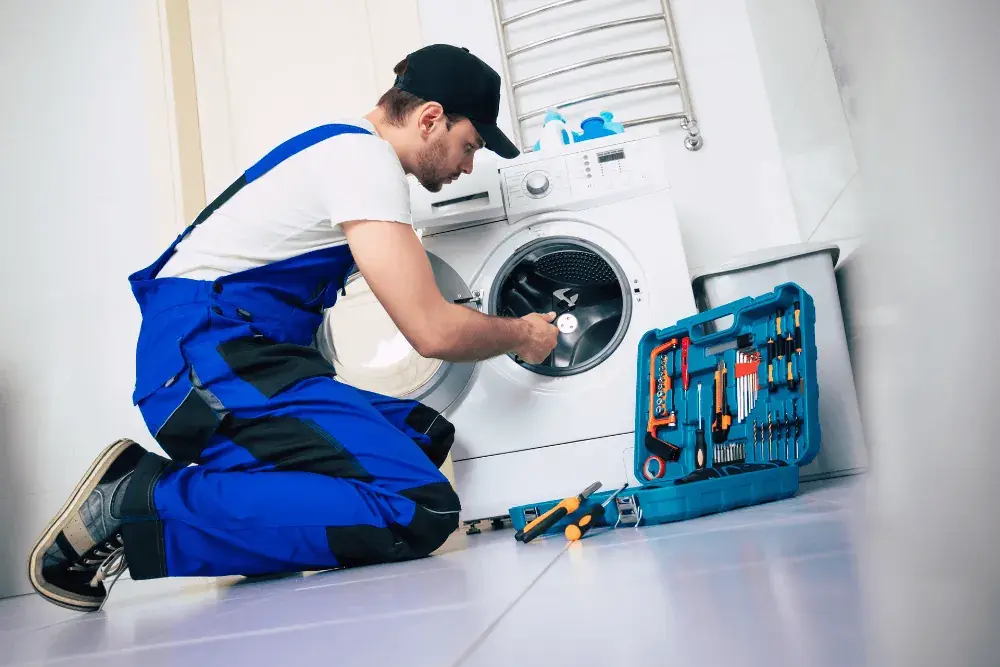
One Click Dubai technician repairing a combined washer dryer

Overview

One Click Dubai repairs washer dryers at home across Dubai, with a technician sent the same day. We repair combined washer dryers that wash and dry in one drum, separate washers and dryers including stacked pairs, and the coin-operated and commercial laundry machines used in buildings, laundries and staff accommodation.

A combined washer dryer is a washing machine with a drying system built into the top of it: a heater, a fan and a condenser. The washing half fails like any washing machine. The drying half has its own faults, and the commonest of them, washing well and not drying, is nearly always a blockage of fluff that the owner cannot see or reach. This page explains how the drying side works, takes each fault in turn, and covers installation, stacking and cost.

Washer dryer repair in Dubai: the short answers

Washer dryer repair in Dubai from One Click Dubai starts with a AED 100 diagnostic visit, plus VAT. The technician tests the wash and dry functions separately, checks the drying heater, fan, thermostats and condenser, and gives a fixed price before any repair.

QuestionAnswer
How soon can you come?The same day, at any hour
Which machines?Combined washer dryers, separate washers and dryers, stacked pairs, coin-operated and commercial laundry machines
Which brands?Bosch, Siemens, LG, Samsung, Beko, Indesit, Hotpoint, Hoover, Candy, AEG, Electrolux, Zanussi, Whirlpool, Miele and others
What do you repair?Drying heaters, thermostats, fans, condensers and fluff blockages, plus pumps, belts, bearings, seals, motors and boards
Do you install?Yes, including stacking kits, water, drain and venting connections
Is it repaired at home?Yes, in most cases
What does the visit cost?AED 100 plus VAT, with no night or weekend surcharge
Is the repair covered?Yes. One month on parts and labour

Washer dryer, or washer and dryer?

A washer dryer is one machine that washes and then dries in the same drum. A washer and dryer are two machines, side by side or stacked. People use the same words for both, and the faults are different, so it helps to be clear which you have.

SetupHow to recognise itWhat is different
Combined washer dryer (combo)One machine, one door. The programme dial has drying settings, often a clock or sun symbolDries by condensing. Dries about half to two-thirds of what it can wash. No lint filter you can reach on many models
Separate washer and vented dryerTwo machines. The dryer has a wide flexible hose to a wall or windowThe dryer's lint filter and vent hose need regular clearing
Separate washer and condenser dryerTwo machines. The dryer has a water tank to empty or a drain hose, and a condenser to rinseCondenser and filters need cleaning
Heat pump dryer or heat pump comboRuns cool and slowly, very low power useExtra filters. A sealed refrigeration circuit
Stacked or stackable pairDryer fixed on top of a front load washer with a stacking kitThe kit must match both machines
Laundry centreA one-piece tower with a top load washer below and a dryer aboveShared controls. Common in some villas and staff housing

This page deals mainly with combined machines. For a separate dryer, see dryer repair. For the washing side of any machine, see washing machine repair.

How a washer dryer dries

A combined washer dryer dries by blowing heated air through the tumbling load and then cooling that damp air so the moisture turns back to water and is pumped away. Nothing is vented outside.

1
Spin

The machine spins the load as dry as it can. Drying a poorly spun load takes far longer.

2
Heat

A fan pushes air across a drying heater mounted in a duct on top of the tub.

3
Tumble

Hot air enters the drum through the door seal area and picks up moisture from the laundry.

4
Condense

The damp air is drawn down a condenser duct at the back of the tub. On most machines a fine trickle of cold tap water runs down this duct to cool the air, and the moisture condenses.

5
Drain

The condensed water and the cooling water collect in the sump and are pumped out through the normal drain hose.

6
Repeat

The cooled, dry air returns to the fan and goes round again.

7
Cool down

The heater switches off and the drum tumbles in cool air before the door lock releases.

PartJobWhat happens when it fails
Drying heaterHeats the airTumbles cold. Clothes stay wet
Thermostats and thermal fuse on the heater ductStop the heater overheatingTrip or blow when airflow is blocked. No heat until reset or replaced
Drying fan and motorMoves the airHeater overheats and cuts out. Weak or no drying
Condenser ductTurns steam back to waterBlocked with fluff. Long cycles, steam, damp clothes
Condenser water valveSupplies the cooling trickleNo condensing. Clothes hot and damp, room steamy
Temperature and moisture sensorsTell the board when the load is dryStops too early or runs too long
Drain pumpRemoves the waterDrying stops with a drain error

Two things follow from this design. A washer dryer uses water to dry, so the tap must stay open. And fluff from the laundry has nowhere to go except the ducts, the fan and the pump filter, which is why it builds up inside.

Washer dryer not drying

A washer dryer not drying, while it washes normally, has lost heat or lost airflow. In most machines the first cause is fluff blocking the condenser duct or the fan, which makes the heater overheat and trips its safety thermostat.

What you noticeLikely causeRepair
Clothes cold and wet after a full drying cycleHeater open circuit, or its thermal fuse or thermostat trippedFind why it tripped. Clear fluff. Reset or replace the thermostat. New heater if failed
Clothes hot and still wet, steam when the door opensCondenser blocked, or no cooling water reaching itClear the duct. Check the tap and the condenser valve
Clothes warm and dampPartial blockage, overloaded drum, poor spin beforehandClean. Dry a smaller load
Drying takes hoursRestricted airflow, weak fan, load too largeClean the air path. Fan motor
Stops early, clothes dampSensor misreading, or timed dry set too shortSensor. Use a longer setting
Drying programme will not startDoor lock, load weight too high for drying, or a board faultReduce the load. Test
Stops with an error part way throughOverheat, drain or sensor faultNote the code and book a visit
Worked after a repair, failed again in weeksThermostat reset without clearing the fluffFull strip and clean

Check these yourself first

Is the tap fully open? The condenser needs water.
Is the load small enough? Most machines dry about half their wash capacity. A full wash load must be split for drying.
Did it spin properly? If the clothes came out of the wash dripping, the fault is in the spin or drain, not the dryer.
Is the pump filter clear? It catches fluff from every drying cycle.
Is a drying programme actually selected? Many machines wash only unless drying is added.

If the answers are all yes, the machine needs opening. The heater and condenser ducts are behind the top and back panels and are not user-serviceable.

Fluff, the condenser and why the fault comes back

A tumble dryer has a lint filter you empty after every load. Most combined washer dryers do not. The fluff that comes off the laundry is supposed to be rinsed down the condenser and pumped out, and in practice a good part of it sticks.

Where fluff collectsEffect
Condenser ductWet fluff forms a felt-like plug. Air cannot circulate
Fan housing and fan bladesAirflow falls, the fan labours and can jam
Heater ductFluff on the element scorches. A burning smell, and a fire risk
Door seal and the air inlet behind itFluff blown back onto the laundry
Pump filter and sumpSlow draining, drain errors
1
Remove the top and back panels

And the heater duct cover.

2
Remove the fan housing

Clean the fan and check its motor bearings.

3
Clear the heater duct

And inspect the element and thermostats.

4
Detach and wash out the condenser duct

Until water runs through freely.

5
Check the condenser water feed

A blocked jet stops the cooling trickle.

6
Clear the pump filter and sump

Then rebuild and run a timed dry.

Resetting the thermostat without this clean is why so many washer dryers fail again within a month. To slow the build-up, run a rinse or a fluff-clean programme after drying if your machine has one, wipe the door seal, shake out fluffy items before drying and clear the pump filter monthly.

Clothes too hot, burning smell or overheating

A washer dryer that scorches clothes, smells of burning or leaves the door too hot to touch is overheating. Stop the cycle and let it cool with the door closed.

SignCauseRepair
Burning or singed smell while dryingFluff on the heaterClean the heater duct. Check the element
Clothes very hot, some yellowedFan not running, so heat is not carried awayFan motor or capacitor
Door glass extremely hotAirflow blockedFull clean
Rubber smellDoor seal overheating near the air inlet, or a belt slippingInspect. Replace
Heater stays on, cycle never endsRelay on the board stuck, or a sensor failedBoard or sensor
Thermal fuse blownAn overheat happenedFind the cause before replacing the fuse

The thermostats on the heater duct are safety devices. A machine that keeps tripping them is telling you it cannot get rid of heat.

Washer dryer not spinning or not draining

A washer dryer not spinning has a fault on the washing side, and it will stop the drying too, because the machine will not dry a load it could not spin. The causes are those of any front loader.

SymptomLikely causeRepair
Water left in the drumPump filter blocked with fluff, pump failed, drain hose kinkedClear. New pump
Drains, will not spinLoad out of balance, worn shock absorbers, door lock, beltRebalance. Test and replace
Spins slowly, clothes wetBelt slipping, motor brushes worn, drain restrictedBelt or brushes. Clear the drain
Drum will not turn at allBelt off, motor or its control failedBelt, motor or board
Loud roar on spinDrum bearingsBearing replacement
Bangs on spinShock absorbers, or the machine not levelReplace. Level

Washer dryers block their pump filters faster than washing machines because of drying fluff. Our guides cover not spinning and not draining step by step, and the parts are explained on our washing machine parts page.

Washer dryer leaking

A washer dryer leaking has the same leak points as a washing machine, plus two of its own: the condenser duct joints and the condenser water feed.

Where the water isLikely causeRepair
At the doorDoor seal torn, or fluff holding it off the glassClean or replace the seal
Back of the machine, only when dryingCondenser duct joint or its seal leaking, or the duct blocked and overflowingClear and reseal
Back top cornerInlet valve or the condenser valveNew valve
Underneath, frontPump filter seal or pump bodySeal or pump
Underneath, during spinTub seal with worn bearings, or a split sump hoseHose or bearing repair
From the detergent drawerDrawer blocked with powder, or water pressure too highClean the drawer and its housing
Water in the drum when offInlet valve not closingNew valve. Close the tap

See also our guide to a washing machine leaking water.

Smells, creased or fluffy laundry

Poor results from a washer dryer usually come from how it is loaded and how clean it is inside, not from a failed part.

ProblemCauseWhat to do
Musty smellMould in the door seal, drawer and tub from low-temperature washingMonthly hot maintenance wash. Leave the door ajar
Clothes covered in fluff after dryingFluff in the ducts blown back, or mixed fabrics dried togetherInternal clean. Dry towels separately
Heavy creasingOverloaded for drying, or left in the drum after the cycleSmaller loads. Remove promptly
ShrinkageFabric not suitable for tumble drying, or too high a heatCheck care labels. Use the gentle setting
Uneven dryingLarge items balled up, or load too bigUntangle and split the load
Damp patchesLoad too large for the drying capacityDry half the wash load at a time

Error codes and what to tell us

Washer dryers report faults as a code on the display or a pattern of flashing lights. The codes are specific to each make and often to the model, so the same letters mean different things on different machines.

Write down the exact code and what the machine was doing when it appeared. filling, washing, spinning or drying.
Note whether it appears every time or now and then.
Switch the machine off at the wall for five minutes and try once more. A code that returns is a real fault.
Do not keep restarting a machine that shows a heating or drying fault.

Send the code with the model label when you book. We look it up for the specific machine and bring the parts it points to. Our brand pages list the codes we have been able to confirm from maker documentation, including Bosch, Siemens, LG and Samsung.

Separate dryers and stacked pairs

Where the washer and dryer are two machines, drying faults belong to the dryer, and the commonest is again airflow.

Dryer typeUsual faultRepair
VentedLint filter and vent hose blocked, hose crushed behind the machineClear and re-route. Check the wall vent
CondenserCondenser unit clogged, water tank full, pump failedRinse the condenser. Pump
Heat pumpFilters blocked, evaporator fins clogged, drain blockedClean. Service
AnyDrum not turning: belt snappedNew belt
AnyNo heat: element, thermostat or thermal fuseTest and replace
StackedVibration and noise passed from the washerCheck the stacking kit and the washer's shock absorbers

Clean a dryer's lint filter after every load and its condenser monthly. A blocked vent hose is the leading cause of dryer overheating. For full detail see dryer repair.

Washer dryer installation, stacking and hookups

We install combined washer dryers and separate washers and dryers, and we stack pairs with the correct kit. A good installation prevents most of the noise, leak and drainage complaints we are later called to.

RequirementDetail
Transit boltsRemoved from the back of the washer and kept for future moves
LevelAll four feet adjusted and locked, on a firm floor
Cold water supplyA tap with a shut-off, and a new inlet hose
DrainA standpipe or sink trap connection, with the hose hooked at the height the maker specifies so the machine cannot siphon
Electrical supplyA socket of the right rating within reach, not an extension lead. A washer and a dryer should not share one socket
VentilationClearance around a condenser or heat pump dryer. A route outside for a vented dryer's hose
Stacking kitThe kit made for the two machines, fixed to the washer's top with the dryer's feet locked in. A strap where supplied
Stacking orderDryer on top of the washer, never the reverse. Front load washers only

Adding a washer dryer connection

Where there is no existing connection, a hookup needs a cold water feed, a drain point and a socket. In an apartment this may need the building management's approval. We look at the route and tell you what is involved before starting.

Built-in machines

Integrated washer dryers sit behind a cabinet door fixed to the machine. They need the plinth clearance and door hinges set correctly, or the door rubs and the machine overheats.

Coin-operated and commercial laundry machines

We repair coin-operated and commercial laundry machines in residential towers, staff accommodation, laundrettes and laundromats, hotels, salons and gyms. These machines run many cycles a day, and their faults reflect that.

MachineCommon faultsRepair
Coin or card operated washerCoin mechanism jammed or not registering, payment board fault, door lock, drain valveClear or replace the mechanism. Repair
Commercial washer extractorDrain valve stuck, inlet valves, bearings, belts, door seal, inverter driveReplace the worn part
Commercial tumble dryerLint screen and duct blocked, burner or element not heating, belt, drum rollers, airflow switchClean. Replace
Stacked commercial washer and dryerAs above, with shared controlsDiagnose each half
Commercial dryers must have their lint screens cleared several times a day and their exhaust ducts cleaned on a schedule. Lint is the main fire risk in a laundry.
Machines in shared laundry rooms suffer from overloading and from foreign objects. A notice about load size prevents many breakdowns.
Tell us the make, the model and whether it takes coins, tokens or cards.

Commercial work is quoted after diagnosis in the same way, and planned around the laundry's quiet hours.

Brands we repair

We repair every make of washer dryer sold in Dubai, with genuine parts.

BrandWasher dryer types we see
Bosch and SiemensFreestanding and built-in water-condensing combos
LGDirect drive combos, including heat pump models
SamsungFreestanding combos in a range of sizes
BekoFreestanding and integrated combos
Indesit, Hotpoint and AristonFreestanding and built-in combos
Hoover and CandyFreestanding combos
AEG, Electrolux and ZanussiFreestanding and integrated combos
Whirlpool and MieleFreestanding combos and separate pairs
Haier, Smeg and Super GeneralFreestanding combos
Whirlpool, Maytag, Frigidaire, Kenmore and GEAmerican-style stackable pairs and one-piece laundry centres

Whatever the make, the drying faults are the ones described above: fluff in the air path, heater thermostats, the heater, the fan and the condenser water feed. What differs is how each machine is taken apart and which part numbers fit, which is why the model label matters.

Each make has its own page under washing machine brands we repair.

Looking after a washer dryer

A washer dryer needs more care than a washing machine because it has no lint filter to empty. These habits keep the air path clear and the drying times short.

Dry no more than the drying capacity in the manual, which is roughly half the wash load.
Use the highest spin speed the fabric allows before drying. Less water in means less time drying.
After drying towels or fleece, run a short rinse or the machine's fluff-rinse programme with the drum empty.
Wipe the door seal fold and the door glass after each drying cycle.
Clear the pump filter every month.
Run a hot maintenance wash with a drum cleaner once a month.
Keep the tap fully open, and leave the door ajar when the machine is not in use.
Have the condenser, fan and heater duct cleaned inside every year or two, or sooner if drying times grow.

A drying time that creeps up from two hours to three or four is the early sign of fluff building. Booking a clean then avoids a tripped thermostat and a scorched heater later.

What washer dryer repair costs, and repair or replace

Most washer dryer drying repairs are a strip-down and clean with a thermostat or heater. They are labour more than parts.

RepairScale of jobWorth doing?
Pump filter clear, hose, drawer cleanSmallYes
Condenser, fan and heater duct cleanMedium. Mostly labourYes
Heater thermostat or thermal fuse, with cleanMediumYes
Drying heaterMediumYes
Drying fan motorMediumYes
Condenser valve, sensorSmall to mediumYes
Pump, belt, door seal, lockSmall to mediumYes
Control boardMedium to largeOn a machine in good condition
BearingsLargeDepends on the tub type and the machine's age

The diagnostic visit is AED 100 plus VAT, with a fixed price before any work. Replace the machine when it needs bearings on a sealed tub, or a board and a major part together, on a machine over eight to ten years old. If only the drying has failed on an old machine and the repair is large, it can carry on as a washing machine.

We cover all of Dubai, including Dubai Marina, JBR, Palm Jumeirah, JLT, Downtown, Business Bay, Jumeirah, Al Barsha, Dubai Hills and Deira.

Frequently asked questions

Who repairs washer dryers in Dubai?

One Click Dubai repairs washer dryers at home across Dubai, the same day. Call or WhatsApp +971 55 209 9785.

Why is my washer dryer washing but not drying?

Fluff blocking the condenser or fan, a tripped heater thermostat, a failed drying heater or no cooling water to the condenser.

Why are my clothes hot and still wet?

The condenser is blocked or has no water supply, so the moisture is not being removed.

How much can a washer dryer dry?

About half to two-thirds of its wash capacity. A full wash load has to be split.

Does a washer dryer use water to dry?

Most do. A trickle of cold water cools the condenser, so the tap must stay open.

Why does the drying fault keep coming back?

The thermostat was reset or replaced without clearing the fluff that caused the overheat.

Do you repair Bosch washer dryers?

Yes, and Siemens, LG, Samsung, Beko, Indesit, Hotpoint, Hoover, Candy, AEG, Electrolux, Zanussi, Whirlpool and Miele.

Do you install and stack washers and dryers?

Yes, with the stacking kit made for the two machines.

Do you repair coin-operated laundry machines?

Yes, along with commercial washers and dryers.

How much does washer dryer repair cost?

The diagnostic visit is AED 100 plus VAT. The repair is quoted at a fixed price once the fault is found.

Is it worth repairing a washer dryer?

Usually. Most drying faults are a clean and a small part.

Is the repair guaranteed?

Yes, for one month on parts and labour.

Book a washer dryer repair

Call or WhatsApp +971 55 209 9785 at any hour, or use the booking form. Send the model label and tell us whether the fault is in washing, spinning or drying, and any code on the display.

CallWhatsApp